Best Wasp and Hornet Killers 2026: Sprays, Foams, and Traps
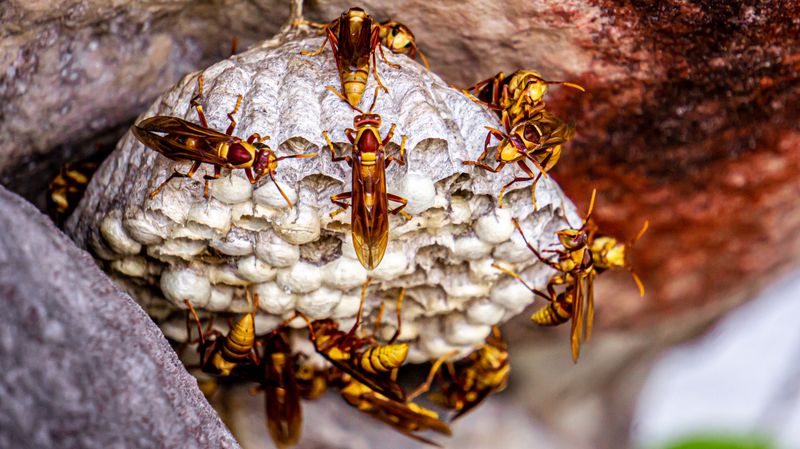
June through September is peak wasp and hornet season. Colonies that started with a single queen in spring now hold hundreds — sometimes thousands — of workers, and late-summer colonies are at their most defensive. Choosing the right product for the right situation can mean the difference between a resolved nest and a swarm of angry yellowjackets.
This guide reviews the best wasp and hornet killers in 2026 by category, with honest pros, cons, and guidance on which situations each product handles best.
How to Choose the Right Product
Before buying anything, ask two questions:
- Where is the nest? Aerial nests in the open (paper wasp nests under eaves, bald-faced hornet nests in trees) are treated differently than underground yellowjacket colonies or wall void infestations.
- How large is the colony? A small paper wasp nest with a dozen workers is a quick aerosol job. A mature underground yellowjacket colony with 5,000+ workers requires a dust treatment or professional intervention.
See our complete guide to getting rid of wasps and hornets for species identification and a full treatment walkthrough.
Category 1: Aerosol Jet Sprays (Best for Aerial Nests)
Aerosol jet sprays are the go-to tool for exposed nests — paper wasp nests under eaves, bald-faced hornet nests in trees, and any nest you can see and access from a safe distance. The best formulas shoot a directed stream 20–27 feet, letting you treat the nest entrance without getting close.
Best Overall: Spectracide Wasp & Hornet Killer
The most effective aerosol jet spray available to consumers.
Spectracide Wasp & Hornet Killer uses a combination of prallethrin and lambda-cyhalothrin to knock down wasps and hornets on contact. The jet stream reaches up to 27 feet — among the longest range in its class — and the dielectric formula is safe to spray around electrical fixtures.
Active ingredients: Prallethrin 0.025%, Lambda-cyhalothrin 0.025%
Pros:
- 27-foot jet stream for maximum standoff distance
- Kills wasps and hornets on contact
- Dielectric formula — safe for use near outdoor electrical fixtures
- Leaves a residual that kills returning wasps for up to 4 weeks
- Inexpensive and widely available
Cons:
- Strong chemical odor
- Not safe to use indoors
- Toxic to bees and aquatic organisms — avoid overspray
Best for: Paper wasp nests, bald-faced hornet nests, exposed eave and soffit nests
Price: $ (approx. $6–$9 per can)
Runner-Up: Raid Wasp & Hornet Killer
Raid’s wasp and hornet formula uses cypermethrin and prallethrin, with a 22-foot jet stream. It’s slightly shorter-range than Spectracide but has a more targeted stream that gives better penetration into nest openings. Performance is comparable; availability and brand trust make it a reliable alternative.
Active ingredients: Cypermethrin 0.05%, Prallethrin 0.1%
Best for: Visible nests in tight spaces where precision matters more than range
Price: $ (approx. $7–$10 per can)
Category 2: Foam Killers (Best for Enclosed Spaces)
Foam formulas expand on contact, filling cavities and penetrating deep into enclosed nest areas. They’re the right choice when the nest entrance is in a crack, crevice, or void where a jet stream would dissipate.
Best Foam: Ortho Home Defense Hornet & Wasp Killer
The best foam formula for nest elimination in enclosed spaces.
Ortho’s foam expands to fill the area around the nest entrance, saturating the colony structure and killing wasps on contact. The foam also serves as a visual indicator of coverage — you can see where the product has reached. It shoots a precise stream that converts to foam on impact.
Active ingredients: Tetramethrin, Permethrin
Pros:
- Foam fills enclosed spaces jets can’t saturate
- Kills on contact and leaves residual protection
- Also effective as a standard jet spray before foaming
- Good for nests in wall voids, under decking, and in dense vegetation
Cons:
- Shorter effective range than pure jet sprays (about 15–20 feet)
- Foam can drip, causing mess on surfaces below
- Slightly more expensive per can
Best for: Nests inside wall voids, under decking, inside utility fixtures, or in dense shrubs
Price: $$ (approx. $10–$14 per can)
Category 3: Insecticide Dust (Best for Underground Yellowjacket Nests)
Underground yellowjacket nests — built inside soil burrows, under concrete slabs, or inside retaining walls — are among the most dangerous to treat. Sprays don’t penetrate the burrow effectively. Dust formulations are carried into the nest by returning workers, delivering insecticide deep into the colony structure where sprays can’t reach.
Best Dust: Delta Dust Insecticide
The professional-grade dust treatment for underground and wall void nests.
Delta Dust contains deltamethrin, a long-lasting pyrethroid that retains efficacy even in damp conditions. Apply 1–2 puffs of dust into the nest entrance at dusk (when workers are inside), then leave the entrance undisturbed. Workers carry the dust throughout the colony, killing the queen within 24–72 hours.
Active ingredient: Deltamethrin 0.05%
Pros:
- Penetrates deep into nest galleries where sprays can’t reach
- Waterproof formula remains effective in moist soil
- Long residual — up to 8 months
- Also effective for wall void yellowjacket and hornet nests
- One application typically eliminates the entire colony
Cons:
- Requires a hand duster for application (sold separately)
- Slower-acting than aerosols — plan for 24–72 hours to full kill
- Labeled for pest control professionals in some states — check your state’s restrictions
Application tip: Always treat underground nests at night with a red-lens flashlight. Wasps have poor color vision but respond to white or bright light.
Best for: Underground yellowjacket colonies, wall void nests, attic infestations
Price: $$ (approx. $20–$30 for 1 lb container)
Budget Dust Alternative: CRC Wasp Freeze
When you need an instant knockdown without a long-term residual, Wasp Freeze (d-Phenothrin) acts as a contact kill spray that also immobilizes wasps on impact, allowing you to knock down a nest and manually remove it. It’s not a long-term residual treatment — more of a targeted knockdown for accessible nests you intend to physically remove.
Best for: Quick knockdown of small, accessible nests before physical removal
Price: $$ (approx. $15–$20)
Category 4: Wasp Traps (Best for Area Control Without a Visible Nest)
When wasps are invading outdoor spaces — patios, playgrounds, decks — but you can’t locate the nest, traps provide area control without chemical treatment. They’re also useful during outdoor events or in late summer when yellowjackets become scavengers.
Best Trap: RESCUE! Disposable Yellow Jacket Trap
The most effective trap for controlling yellowjackets in outdoor spaces.
RESCUE! traps use species-specific attractants (proprietary lure blend mimicking yellowjacket food sources) inside a funnel-style container. Wasps enter but can’t exit, and drown in the liquid. Each trap is pre-baited and disposable — just add water and hang it 20+ feet from where you want to enjoy your outdoor space.
Pros:
- Species-specific lure significantly outperforms sugar water or meat baits
- Highly effective in late summer when yellowjackets are most aggressive
- No toxins — safe around children and pets when properly hung
- Disposable — no mess or smell during disposal
Cons:
- Only effective for yellowjackets and some paper wasps — not bald-faced hornets or European hornets
- Becomes less effective as lure ages (replace every 4–6 weeks)
- Must be placed away from where you want to spend time (attracts wasps to the trap, not away from an area)
Best for: Yellowjacket management on patios, decks, and outdoor dining areas
Price: $ (approx. $9–$13 per trap)
Best Reusable Option: RESCUE! Reusable Yellow Jacket Trap
For ongoing seasonal management, the reusable version uses the same attractant lure system but can be emptied and reused across multiple seasons. Replacement attractant cartridges are sold separately.
Price: $$ (approx. $12–$15 for trap; $6–$8 per replacement lure)
Category 5: Natural and Organic Options
If you’re treating near a vegetable garden, food prep area, or where children frequently play, reduced-risk formulas are worth considering — though understand they typically sacrifice residual control and knockdown speed.
Best Natural Spray: EcoSMART Wasp & Hornet Killer
EcoSMART uses plant-derived active ingredients (rosemary oil, cinnamon oil) with a pyrethrin base. It kills wasps on direct contact but leaves no significant residual protection. It’s EPA-exempt, safe for use around food production areas, and breaks down quickly in the environment.
Pros:
- EPA-exempt formula — safe for vegetable gardens and food prep areas
- Pleasant scent compared to synthetic pyrethroids
- Breaks down quickly — minimal environmental persistence
Cons:
- Significantly slower knockdown than synthetic options
- No meaningful residual — returning wasps will not be affected
- Shorter spray range (about 10–12 feet)
- Higher cost per treatment than synthetic sprays
Best for: Vegetable garden areas, food prep patios, households that prefer organic pesticides for principle-based reasons
Price: $$ (approx. $10–$14 per can)
Application Safety Tips
Regardless of which product you choose, follow these rules for safe wasp and hornet treatment:
- Treat at dusk or after dark. Workers are inside the nest, reducing the number of wasps that will respond to a disturbance. Activity also drops in cooler temperatures.
- Wear full protective clothing. At minimum: long pants, long sleeves, gloves, and eye protection. For large colonies, a bee veil is worth the investment.
- Stand downwind and downhill. Spray drift and retreating wasps should move away from you.
- Have an exit route planned. Know exactly where you’ll retreat before you treat. Wasps will respond within seconds.
- Do not seal the entrance immediately. After treating, leave the nest entrance open for 24–48 hours so returning workers re-enter and contact the insecticide. Sealing early traps workers inside, which can drive them into living areas.
- Wait 48 hours before removing the nest. Once activity has stopped completely, nests can be knocked down and bagged. Abandoned nests in wall voids should be removed to prevent moisture damage and future infestations.
When to Call a Professional
Some situations warrant professional treatment rather than DIY:
- Large underground yellowjacket colonies in late summer — mature colonies can hold 10,000+ workers and respond to disturbance aggressively
- Wall void infestations — failing to fully eliminate the colony can leave decomposing wasps and honey in walls, attracting secondary pests
- Bald-faced hornet nests larger than a softball — these hornets are exceptionally aggressive and can spray venom
- Anyone in the household with known venom allergies — a sting during an unsatisfactory treatment is a medical emergency
Read our guide on DIY vs. professional pest control for a full breakdown of when it makes sense to call in an exterminator.
Quick Reference: Which Product for Which Situation
| Situation | Best Product Type |
|---|---|
| Exposed paper wasp nest under eaves | Aerosol jet spray (Spectracide) |
| Bald-faced hornet nest in a tree | Aerosol jet spray — treat from maximum range |
| Nest inside wall void or utility box | Foam killer or residual dust |
| Underground yellowjacket colony | Insecticide dust (Delta Dust) |
| Wasps on patio with no visible nest | RESCUE! yellowjacket trap |
| Near vegetable garden or food prep | EcoSMART natural spray |
The right product matched to the right situation eliminates most wasp and hornet problems in a single treatment. For anything that feels beyond your comfort level, a licensed pest control professional with the right protective equipment is always the safest call.

Kevin Larrabee
Independent trade-focused editorial team