Best Tick Control Products for Your Yard 2026
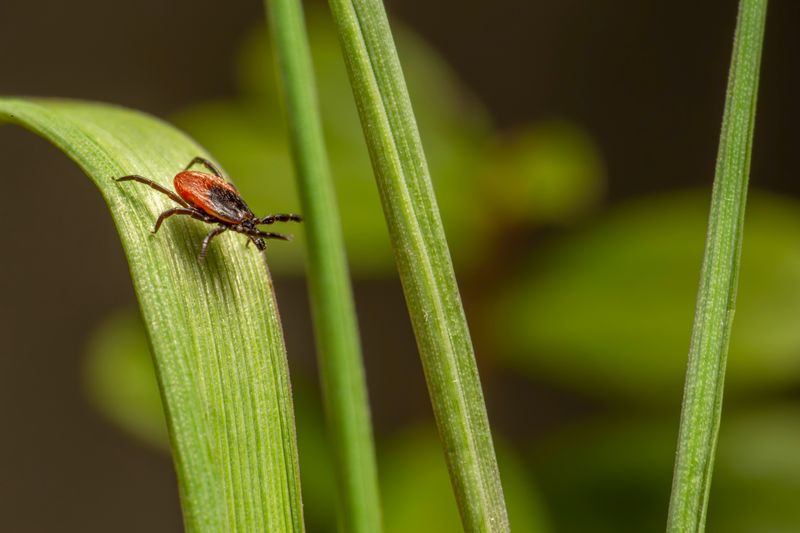
June through August is peak tick season across most of the United States. Black-legged ticks (deer ticks), American dog ticks, and lone star ticks are all at their highest activity levels during summer — and your yard is the primary battleground. The right yard treatment can reduce tick populations by 68–90%, dramatically lowering the risk of tick bites for your family and pets.
This guide covers the best tick control products for your yard in 2026, broken down by category — from ready-to-spray concentrates to tick tubes and organic options.
How Yard Tick Treatments Work
Ticks don’t jump or fly. They “quest” — climbing to the tips of grass blades and low vegetation, then grabbing onto passing hosts. This means treating the perimeter of your yard, leaf litter, and tall grass is more important than treating open lawn areas.
The most effective approach combines:
- A residual insecticide spray for immediate knockdown and lasting protection
- Tick tubes to eliminate ticks in the white-footed mouse population (the primary Lyme disease reservoir)
- Habitat modification — clearing leaf litter, cutting back brush, creating a wood chip barrier at the lawn edge
Category 1: Ready-to-Use Yard Sprays
These attach directly to your garden hose for easy application — no mixing required. Ideal for homeowners who want fast, no-hassle treatment.
Best Overall: Cutter Backyard Bug Control Spray Concentrate
The easiest and most reliable hose-end tick spray.
Cutter Backyard Bug Control uses lambda-cyhalothrin, a synthetic pyrethroid that kills ticks on contact and provides residual protection for up to 12 weeks. It connects directly to a garden hose via a built-in dial sprayer, making coverage fast and even.
Pros:
- Ready-to-use — no measuring or mixing
- Fast-acting with up to 12 weeks of residual control
- Also controls mosquitoes, fleas, ants, and spiders
- Widely available at hardware stores
Cons:
- Toxic to aquatic organisms — avoid spraying near ponds, streams, or drainage areas
- Must reapply after heavy rainfall
- Not safe for bees when wet (apply in evening when bees are less active)
Best for: Most residential yards; first-time DIY yard sprayers
Coverage: 5,000 sq ft per bottle
Price: $ (approx. $10–$15)
Runner-Up: Ortho Home Defense Insect Killer for Lawns
Ortho’s lawn insect killer uses bifenthrin and zeta-cypermethrin, providing excellent broad-spectrum tick control. The Comfort Wand applicator eliminates the need for a separate hose-end sprayer.
Pros:
- Dual active ingredients provide broader spectrum control
- Kills ticks and 100+ other lawn insects
- Fast knockdown
Cons:
- Slightly more expensive than single-ingredient products
- Strong residual odor for 24–48 hours after application
Price: $$ (approx. $18–$25)
Budget Pick: Spectracide Triazicide Insect Killer for Lawns
Spectracide Triazicide uses gamma-cyhalothrin and covers up to 10,000 sq ft per bottle. It’s one of the most cost-effective tick sprays available and is effective against deer ticks, American dog ticks, and lone star ticks.
Best for: Large properties where cost-per-square-foot matters
Price: $ (approx. $8–$12)
Category 2: Concentrate Sprays (Pump Sprayer)
Concentrates mixed in a pump sprayer give you more control over the spray pattern and application rate. These are the preferred choice for perimeter treatments, brush edges, and wooded border areas.
Best Concentrate: Bifen IT (Bifenthrin 7.9%)
Professional-grade bifenthrin at DIY pricing.
Bifen IT is one of the same active ingredients used by professional pest control companies. Diluted and applied with a pump sprayer, it provides excellent knockdown and up to 90 days of residual control. It’s especially effective along the yard perimeter, under decks, around wood piles, and in leaf-litter zones where ticks hide.
Pros:
- Professional-strength active ingredient (7.9% bifenthrin)
- Long residual — up to 90 days in undisturbed areas
- One bottle makes up to 96 gallons of spray solution
- Cost-effective for large properties
Cons:
- Requires a pump sprayer and measuring
- More careful application needed to avoid runoff into water features
- Toxic to fish and aquatic invertebrates
Dilution rate: 0.33–1 oz per gallon of water for tick control
Price: $$ (approx. $25–$35 for 32 oz)
Permethrin Option: Martin’s Permethrin 10%
Permethrin 10% concentrate is another pro-grade option with a different mechanism of action, making it useful to rotate with bifenthrin for resistance management. Also excellent for treating clothing and gear separately (use a different dilution for fabrics vs. lawn).
Price: $$ (approx. $20–$30 for 32 oz)
Category 3: Granular Tick Treatments
Granules are applied with a broadcast spreader and activated by rainfall or irrigation. They’re slower to activate than sprays but provide persistent control in lawn areas — particularly useful around the full perimeter of the yard.
Best Granule: BioAdvanced Complete Insect Killer for Soil & Turf
BioAdvanced Complete uses imidacloprid and beta-cyfluthrin — a systemic/residual combination that treats both surface pests and soil-dwelling grubs simultaneously. For tick control, it works well in lawn areas and around foundation edges.
Pros:
- Dual active ingredients treat multiple pest types simultaneously
- Easy broadcast spreader application
- Also controls grubs, chinch bugs, and fire ants
Cons:
- Imidacloprid is a neonicotinoid — avoid applying to flowering plants or where bees forage
- Needs water activation within 24 hours of application
- Slower-acting than liquid sprays
Coverage: 5,000 sq ft per 10 lb bag
Price: $$ (approx. $18–$28)
Organic Granule Option: Wondercide Yard + Garden Granules
Wondercide’s granules use cedar oil as the active ingredient — a contact kill with short residual. Safer around children, pets, and pollinators than conventional options, but requires more frequent application (every 2–4 weeks).
Best for: Yards with vegetable gardens; households with organic-only preferences
Price: $$$ (approx. $35–$45 per bag)
Category 4: Tick Tubes
Tick tubes are cardboard tubes stuffed with permethrin-treated cotton. Mice collect the cotton for nesting material, and the permethrin kills the ticks on the mouse before they can be spread further. Since white-footed mice are the primary reservoir for Lyme disease bacteria, tick tubes attack the transmission cycle directly.
Best Tick Tubes: Damminix Tick Tubes
The original and most trusted tick tube product.
Damminix Tick Tubes are the only EPA-registered tick tube product. Place them around the yard perimeter — particularly near stone walls, brush piles, and wooded edges where mice travel. Mice find them within days and collect the cotton.
Pros:
- Targets the tick/mouse disease cycle directly
- No spraying required
- Low environmental impact — permethrin stays inside the nest
- Works in hard-to-spray wooded border areas
Cons:
- Slower-acting (takes 4–6 weeks for full effect as mice collect and use the cotton)
- Must be replaced twice per season (spring and late summer)
- Less effective where deer mice are rare
Placement: Every 30 feet around the yard perimeter, near cover (not in open lawn)
Price: $$ (approx. $25–$35 for 24 tubes)
Category 5: Organic/Natural Sprays
Best Organic: Wondercide Outdoor Pest Control Spray
Wondercide uses cedar oil and sodium lauryl sulfate as active ingredients. It’s effective on contact but has a much shorter residual than synthetic pyrethroids. For families wanting to avoid synthetics, Wondercide is the best-performing natural option — but plan on applying every 2–4 weeks during peak season.
Pros:
- Safe around children and pets when dry
- No chemical runoff concerns near water features
- Pleasant cedar scent
- Kills fleas and mosquitoes as well
Cons:
- Much shorter residual than synthetic options (2–4 weeks vs. 8–12 weeks)
- More expensive per application than conventional products
- Less effective in heavy infestations
Price: $$$ (approx. $30–$45 for 32 oz)
Application Tips
Getting the most from any yard tick treatment:
- Target the right zones. Ticks concentrate at the lawn/woods border, under decks, in leaf litter, around wood piles, and along fence lines — not in the center of an open lawn.
- Mow first. A shorter lawn dries faster and exposes tick hiding spots to treatment.
- Apply in calm conditions. Wind spreads spray onto unintended areas; calm mornings are ideal.
- Avoid applying before rain. Wait at least 24–48 hours after application before irrigation or rain.
- Treat in spring and mid-summer. Two applications — one in May and one in July — cover both nymph and adult tick activity peaks.
- Create a wood chip barrier. A 3-foot-wide wood chip border between lawn and wooded areas reduces tick movement into the yard significantly.
Tick Control Comparison Table
| Product | Type | Active Ingredient | Residual | Coverage | Price |
|---|---|---|---|---|---|
| Cutter Backyard Bug Control | Hose-end spray | Lambda-cyhalothrin | 12 weeks | 5,000 sq ft | $ |
| Ortho Home Defense Lawn | Hose-end spray | Bifenthrin + Zeta-cypermethrin | 12 weeks | 5,300 sq ft | $$ |
| Spectracide Triazicide | Hose-end spray | Gamma-cyhalothrin | 8 weeks | 10,000 sq ft | $ |
| Bifen IT Concentrate | Pump sprayer | Bifenthrin 7.9% | 90 days | 32,000+ sq ft | $$ |
| BioAdvanced Complete Granule | Spreader | Imidacloprid + Beta-cyfluthrin | 3 months | 5,000 sq ft | $$ |
| Damminix Tick Tubes | Passive | Permethrin (in nest) | Season | 4,356 sq ft (24 tubes) | $$ |
| Wondercide Outdoor Spray | Hose-end/pump | Cedar oil | 2–4 weeks | 5,000 sq ft | $$$ |
When to Call a Professional
DIY tick treatments are effective for most residential yards. Consider a professional when:
- You have a large property (1+ acre) with significant wooded borders that are difficult to treat uniformly
- You’ve had repeated tick encounters despite multiple DIY treatments
- You want a quarterly service plan with professional-grade products (bifenthrin at higher concentrations, specialized equipment)
- There’s a known high tick pressure in your neighborhood (check your local health department’s tick surveillance data)
Professional tick control typically runs $150–$450 per treatment for a standard suburban yard, with quarterly plans available from most pest control companies.
Bottom Line
For most homeowners, Cutter Backyard Bug Control (quick, easy, effective) combined with Damminix Tick Tubes (targeting the Lyme disease reservoir) is the most practical and cost-effective yard tick control strategy. Apply Cutter in May and July, deploy tick tubes in spring and again in late summer, and keep the yard perimeter mowed and clear of leaf litter. If you have a larger property or wooded areas, upgrade to Bifen IT concentrate for longer residual control and better penetration into border areas.
For families avoiding synthetic chemicals, Wondercide is the best-performing natural spray — just budget for more frequent reapplication.
See also: Tick-Borne Diseases and Lyme Disease | Flea and Tick Prevention for Dogs and Cats

Kevin Larrabee
Independent trade-focused editorial team